

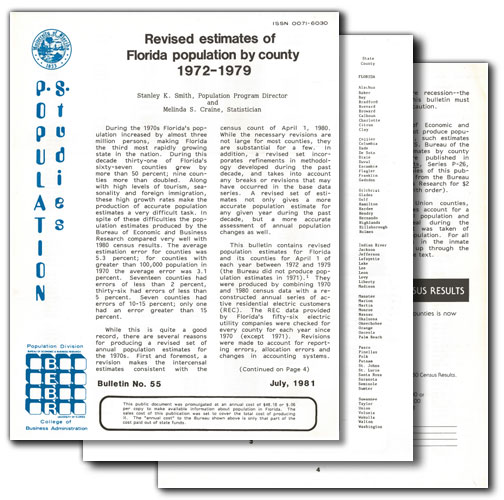
Revised estimates of Florida population by county 1972-1979
Test Page
[most_recent_csi_report_link]Blog Template 1
Test Page 3
BEBR Director, Dr. Christopher McCarty, in collaboration with FSU, obtained a grant from the National Science Foundation to establish a Federal Statistical Research Data Center at the University of Florida (Florida Research Data Center). Only 32 of these data centers exist across the country with the Florida Research Data Center being the only one in Florida. In this center, authorized researchers with approved projects use federal microdata to advance science in ways impossible without the use of this data.

Test Page 2
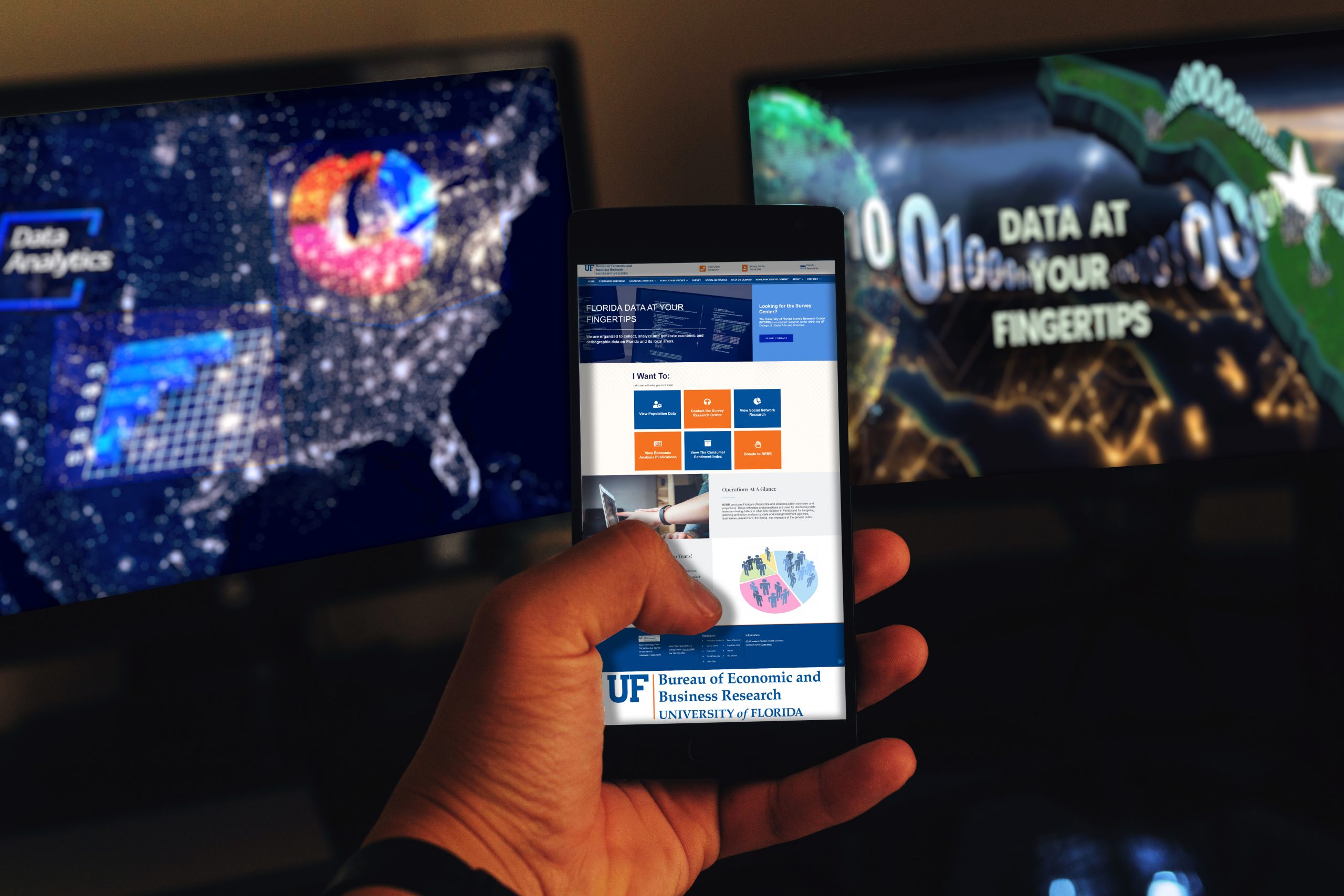
BEBR produces Florida’s official state and local population estimates and projections. These estimates and projections are used for distributing state revenue-sharing dollars to cities and counties in Florida and for budgeting, planning and policy analysis by state and local government agencies, businesses, researchers, the media, and members of the general public.
Blog Template 1
BEBR was founded in 1930 and is part of the UF College of Liberal Arts and Sciences.
BEBR published the Florida Statistical Abstract each year from 1967 to 2011. This award-winning research volume of statistical data about Florida is the leading source of data on Florida and its cities and counties, providing information on population, housing, employment, income, education, health, tourism, elections, and much more.
BEBR continues to offer the same kind of data services today!
(more…)
Collaboration metrics from the UF network data, and their evolution
Part I: Combining Networks From Publication And Grant Activity
Collaborations on publications and grants among UF researchers generate two different social networks. Their union gives us the most accurate and comprehensive picture of the UF scientific network available in the data. In the “union” network, relations can represent collaborations on a grant, a publication, or both. The position of specific actors, such as patent authors, and the relations among them, can be highlighted in the network.
Part II: Collaboration Metrics Based On Network-Level Measures Of Cohesion
Measures of network cohesion and distance show that the UF scientific network became more cohesive, that is, the overall tendency to scientific collaboration increased in the university over 2008-2012. During the same years, the CTSI came to cover an increasingly large part of the UF network, and distances between UF scientists became gradually lower.
Part III: Collaboration Metrics Based On Node-Level Measures Of Centrality
Different metrics can be used to assess the centrality of researchers in the UF scientific community. Degree centrality is the number of collaborators a researcher has, that is, his degree of connectedness to the network. Betweenness centrality is a measure of brokerage, as it quantifies the extent to which a researcher falls on the network paths between other researchers, and is a bridge between separate areas of the network. Closeness centrality measures the extent to which a scientist is close to every other actor, and can easily reach to the rest of the network. Researchers in the CTSI show higher centrality values on average on all these measures in 2008-2012, in both the publication and grant networks, compared to researchers outside the CTSI. In other words, the CTSI gathers some of the most central UF scientists, who tend to be better connected to the university scientific network, more often located in brokering positions between different research groups, and able to more easily reach to other UF scientists to whom they are not directly connected.
Part IV: Collaboration Metrics Based On Diversity Of Actor Attributes
In our scientific networks, the neighborhood of a researcher is the set of all his collaborators in a year. Thus, the degree of department, college or discipline diversity in a researcher’s neighborhood measures the extent to which that researcher engages in interdisciplinary research. CTSI researchers show a higher neighborhood diversity on average over 2008-2012, which means that the CTSI has functioned as a hub for interdisciplinary research at UF in the last years. This is confirmed by the higher number of authors per publication and investigators per grant in the CTSI, compared to the rest of the university. Finally, the CTSI exhibits a prevalence of “open triads” of researchers, as opposed to closed triads, over the years. As open triads tend to connect separate and distant areas of the network, this structural feature of the CTSI network suggests as well an increasing diversity of backgrounds, methods, and substantive topics in CTSI research activities.
Designing a network intervention on the UF scientific network
Social Network Analysis is not just about describing and explaining networks, it is also about using networks for specific interventions with specific goals. Network interventions have traditionally been designed and tested in the health sciences to block contagions or spread healthy practices, and in management and business administration to improve the economic performance of organizations. We explored ways of intervening on research collaboration networks to improve the scientific productivity of a university.
Part I: Why Intervening On A Scientific Network
A scientific network is like a brain: new connections create new ways the whole system thinks and operates. However, when researchers are simply encouraged to pick collaborators for a project (for example, by a traditional Request for Applications by a research funding agency), they tend to collaborate in their comfort zone, that is, to reproduce existing connections in the network by working with previous or anyway close collaborators. Implementing a network intervention on a scientific network means creating new links that cross scientific comfort zones. Moreover, researchers who create links, that is, collaborations, in a scientific network are rarely aware of the whole network structure. On the other hand, by mapping this structure and creating network-aware collaborations, we can create specific new links that enhance specific properties of a university’s scientific network.
Part II: A Survey To Collect Researchers’ Reactions
Based on the structure of the UF scientific network, and on specific network criteria, we identified new links (collaborations) that would be potentially successful, foster interdisciplinary exchange, and enhance certain properties of the whole network. We interviewed the potential collaborators we identified, and collected their views on the possibility of succesfully working with each other.